
A whole hand, while the next one is being dealt
One hand on the phone. No signal needed. Nothing you have to remember and type in later.
What actually happens
- 01
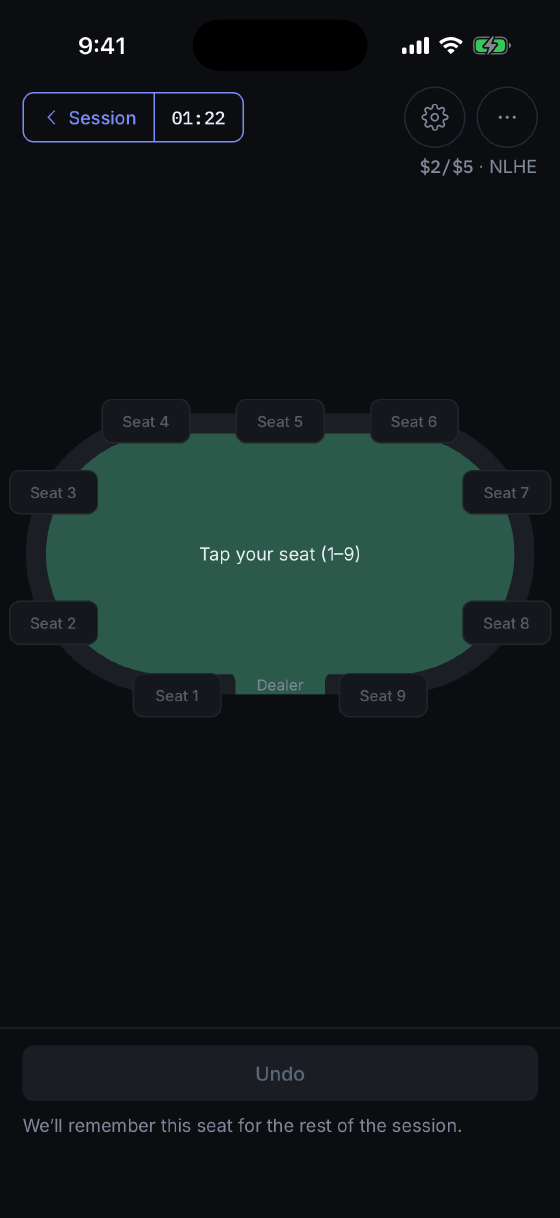
Tap your seat, once per session
The seat map is nine-handed and sticky. Assign the players you recognise and they stay put until you change them.
- 02
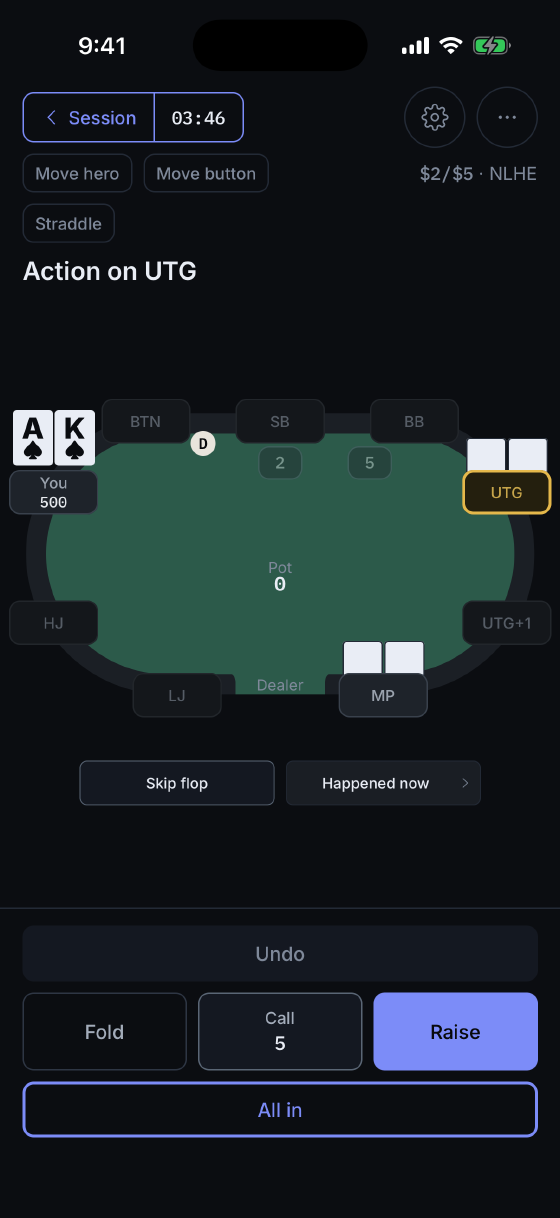
Tap the button
That's the only per-hand setup. Every position at the table is derived from it — LJ, HJ, CO, the blinds — so you never pick them from a list.
- 03
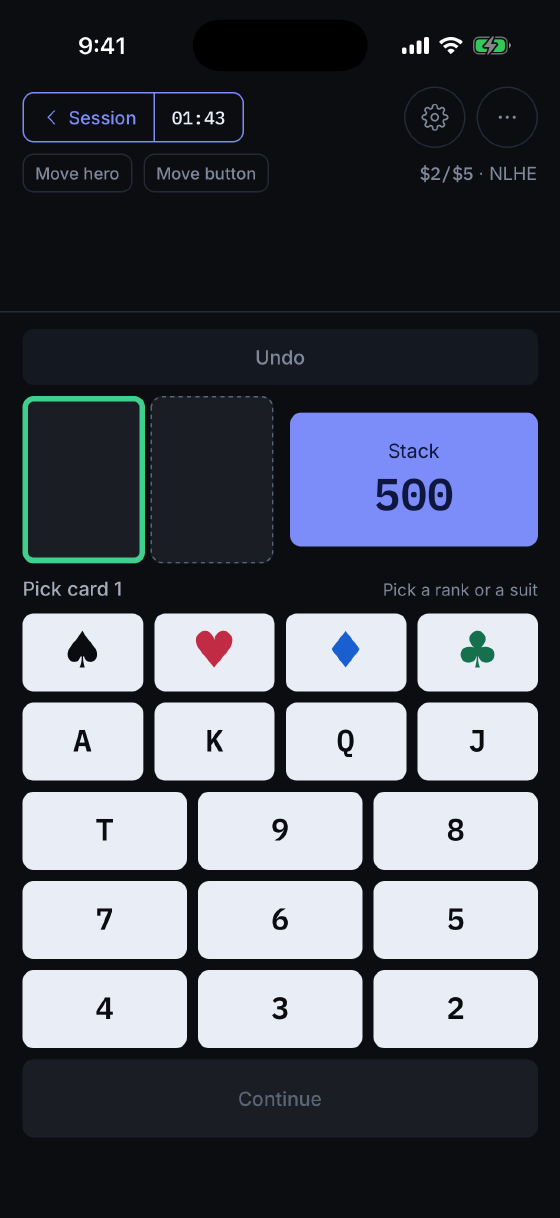
Your cards, your stack
Two taps from a card picker. The stack pre-fills from where the last hand left you.
- 04
Straddles, if there are any
One or more levels, from any position. The blinds and the preflop action order adjust to match.
- 05
Walk the street
The app knows whose turn it is and what they're facing. Fold, check, call, bet, raise, all-in — amounts come off a numeric pad with the min-raise and pot-size already worked out. The street closes itself when the action is done.
- 06
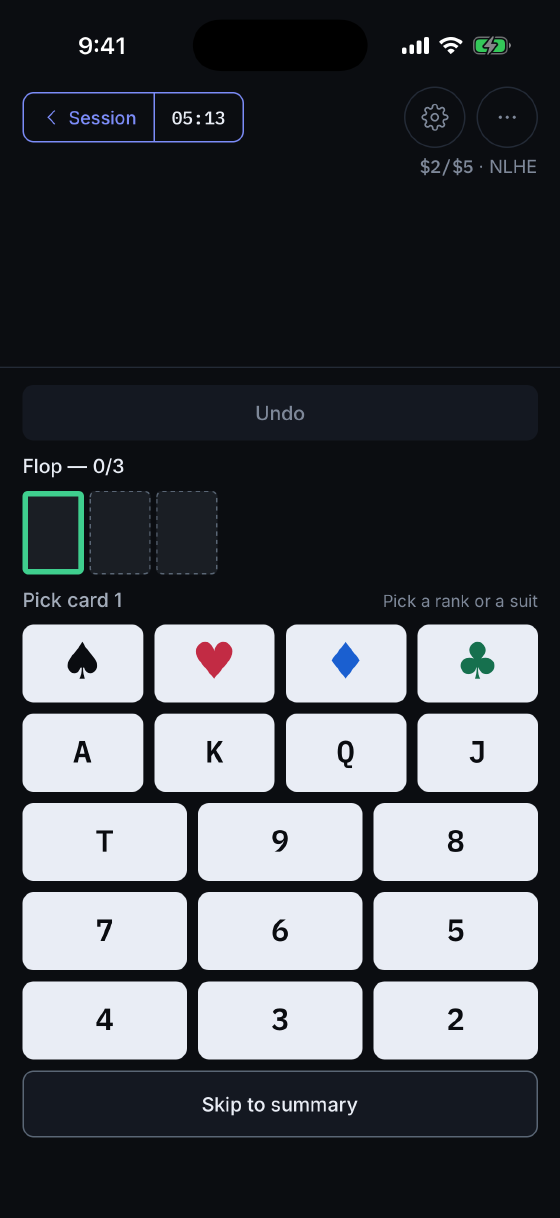
Board, then the next street
Three cards, then one, then one. If everyone folds to a player it ends there and jumps to the summary.
- 07
Run it twice, if you did
When the betting is dead, the app offers to run the rest of the board up to four times and evaluates each independently.
- 08
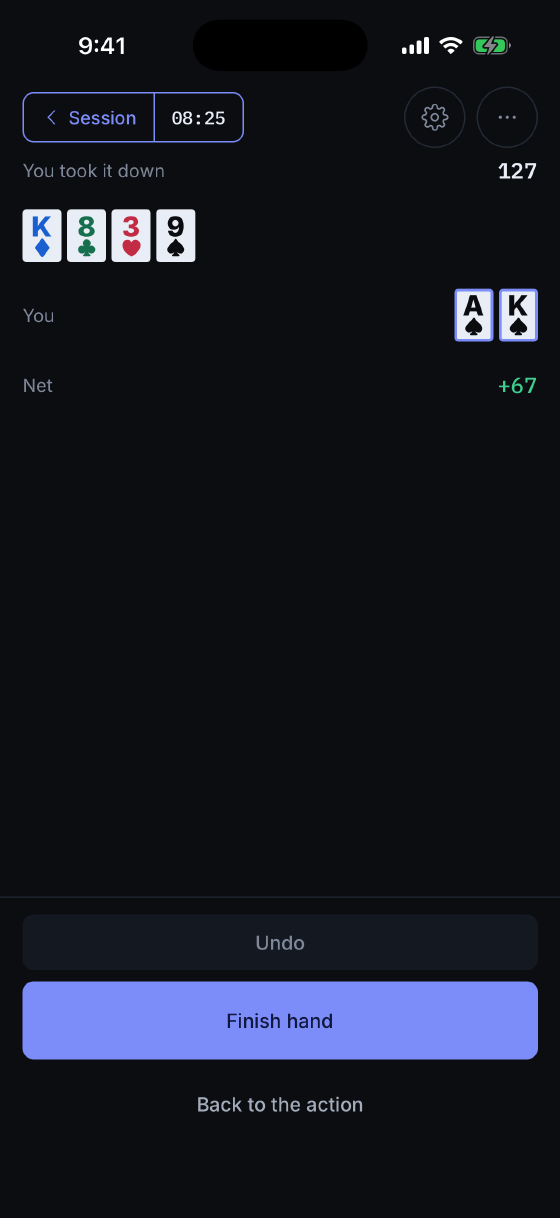
Showdown, if you saw it
Enter what they turned over and the app works out who won. If you didn't see it, skip it — the hand still saves.
It computes what you'd otherwise be guessing at
The pot and every side pot come out of the action log, not out of your memory at 1am. Raises are checked against the legal minimum as you enter them. The showdown is evaluated by a hand evaluator that knows about the wheel and about kickers.
That engine is the part of Hero Call that's already finished — positions, betting rules, pot and side-pot maths, and hand evaluation, with 57 tests behind it.
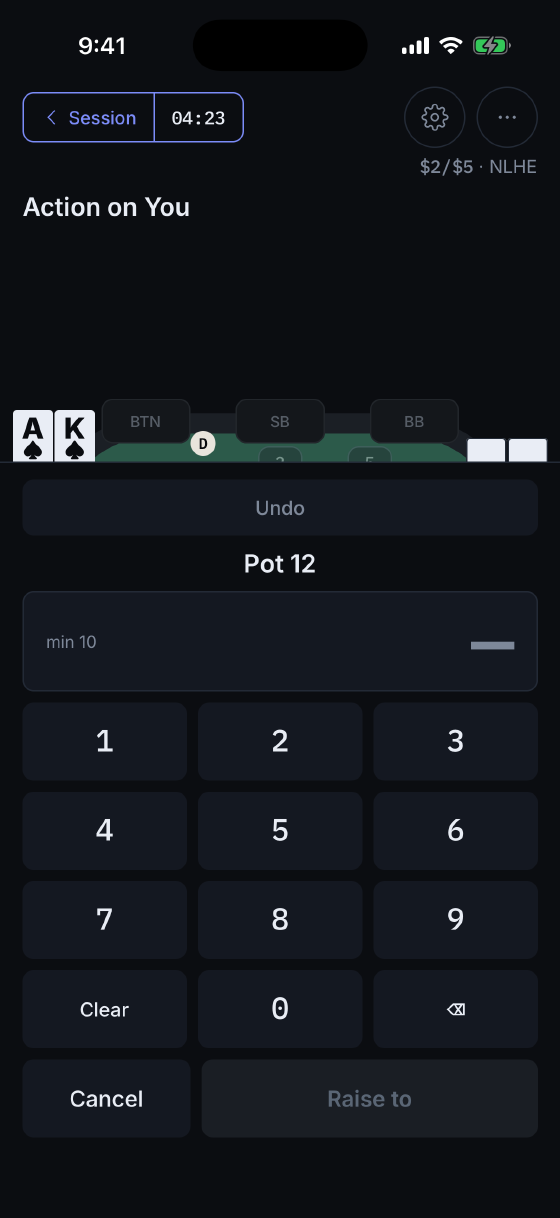
Straddles from any position
Not just under the gun. One level or several, with the action order adjusting — which is how it actually gets played.
One-tap presets
Your Tuesday game, saved. Stakes, buy-in and venue already filled in. You don't re-enter them every week.
Everything stays editable
Forgot a tip, or an add-on, or want to attach a hand to last night's session? Fix it afterwards. Nothing is write-once.
None of those three are guesses about what players want. They're the things people already complain about in reviews of other trackers — the straddle that only works from one position, the session setup that makes you type the same numbers every week, the entry you can't correct once it's saved.
Then you can actually use them
A hand stored as a paragraph is a hand you'll never find again. Because Hero Call stores the structure — seats, positions, each street's actions with amounts, the board as cards — you can ask it things. Every hand where you faced a river overbet. Every pot over a grand. Everything you've played against the guy who's here every Thursday.
It's also what makes the next screen possible at all.
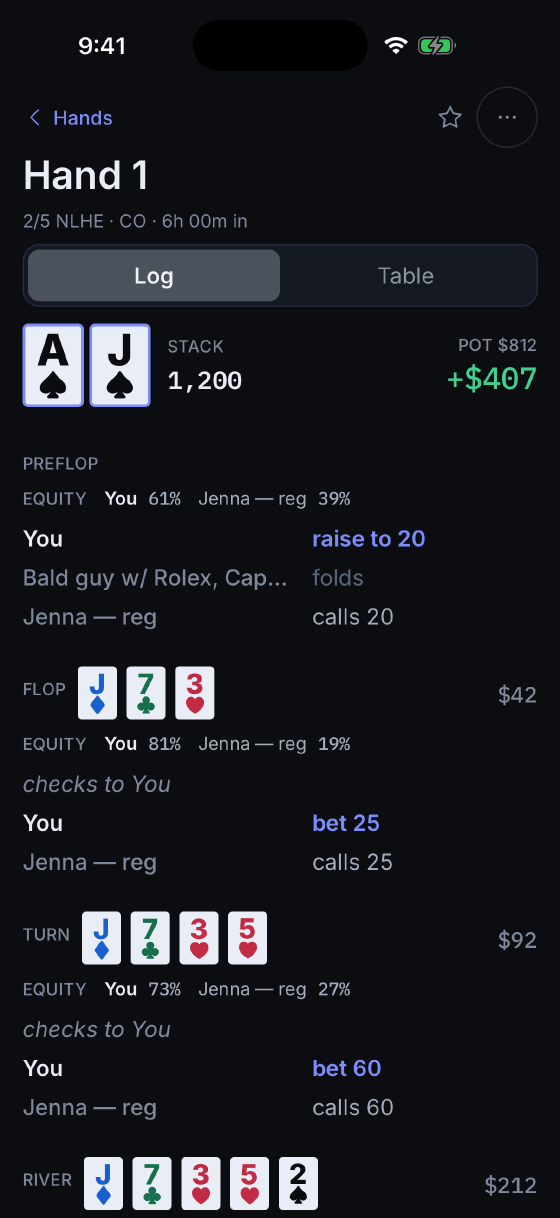
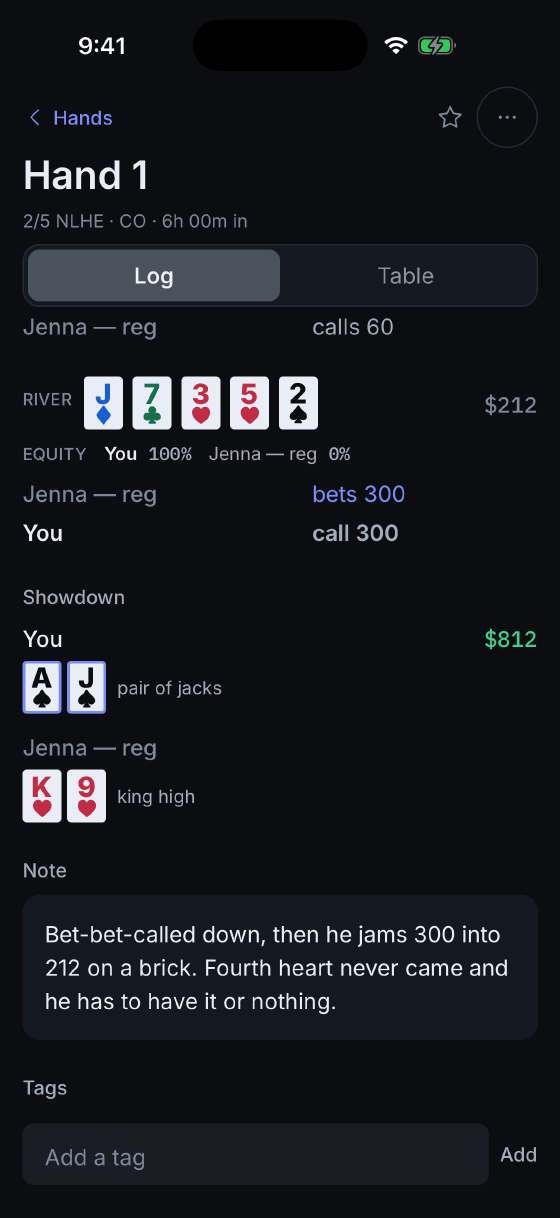
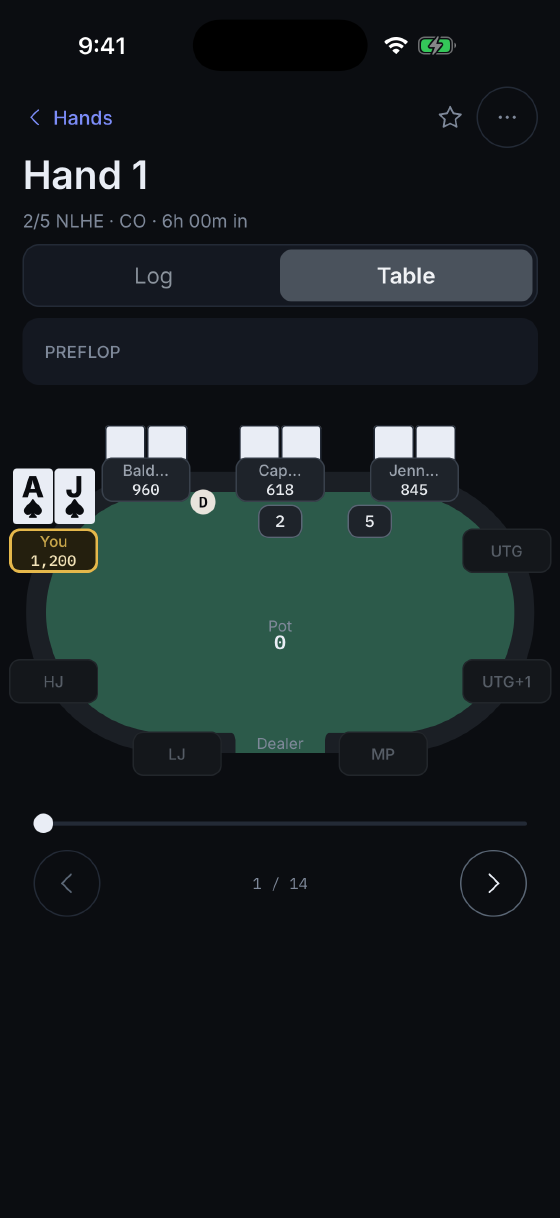
Equity, street by street, on a hand you've saved
Each player's equity as the hand actually unfolded, measured against the cards that were shown and treating what nobody showed as a random hand. It's the clearest thing we can point at to explain why the structure matters: you cannot work this out from a note that says "AQ CO, LJ opens, I call, flop A74r". It needs the hole cards, the board resolved street by street, and who was still live at each point.
It never blocks you
Every field is skippable. A hand with your cards, a board and nothing else is still a hand worth having. There's an undo at every step, so a mis-tap costs one tap rather than the whole hand.
Background it mid-hand, play for twenty minutes, come back — it's exactly where you left it. And none of it needs a signal, because the rooms where you'll use it mostly don't have one.
Be there when it ships
No launch date yet. We'll email when there's something worth telling you about.